 Skip to content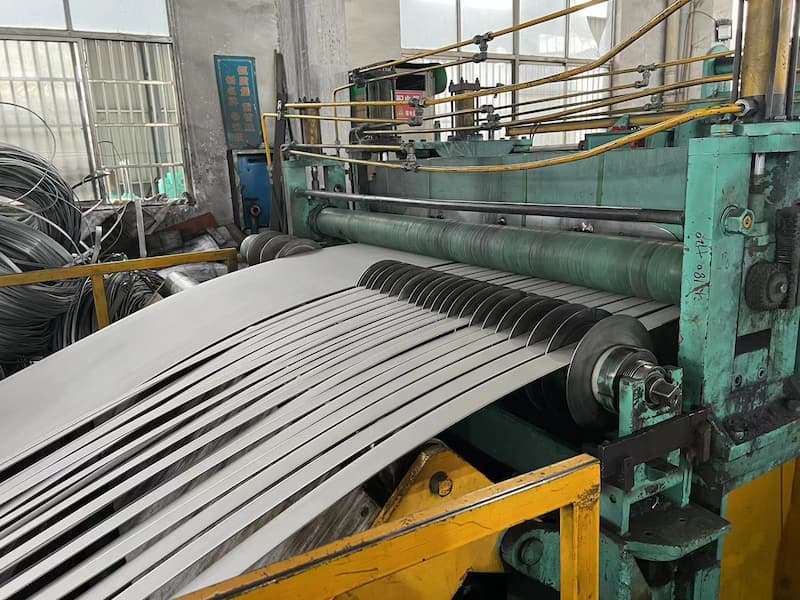
Description
Chemical Composition and Mechanical Properties of SUS347 Stainless Steel
SUS347 is a niobium (columbium)-stabilized austenitic stainless steel with the following composition and properties:
Chemical Composition:
| Element | Percentage |
|---|---|
| Carbon (C) | ≤0.08% |
| Chromium (Cr) | 17.0-19.0% |
| Nickel (Ni) | 9.0-13.0% |
| Manganese (Mn) | ≤2.00% |
| Silicon (Si) | ≤0.75% |
| Phosphorus (P) | ≤0.045% |
| Sulfur (S) | ≤0.030% |
| Niobium (Nb) | 10xC min/1.00 max |
Mechanical Properties:
| Property | Value |
|---|---|
| Yield Strength (min) | 206 MPa |
| Tensile Strength (min) | 520 MPa |
| Elongation (min) | 40% |
| Hardness (max) | 92 HRB |
Applications and Industries Using SUS347 Stainless Steel
SUS347 is ideal for high-temperature and corrosive environments due to its excellent mechanical properties and resistance to intergranular corrosion:
- Aerospace Industry: Used in engine parts, gas turbines, and exhaust systems.
- Petrochemical Industry: Employed in cracking units, refining devices, and heat exchangers.
- Power Generation: Suitable for high-pressure steam environments such as boilers and nuclear power plants.
- Food Processing Equipment: Applied in cookers, drying equipment, and other high-temperature food processing machinery.
- Chemical Processing: Used in reactors, storage tanks, and piping systems.
- Marine Applications: Ideal for components exposed to saltwater environments.
Manufacturing Process of SUS347 Stainless Steel
The manufacturing process involves several steps:
- Melting Raw Materials: Raw materials like iron ore, chromium, nickel, and niobium are melted in an electric arc furnace.
- Refining: The molten metal is refined using Argon Oxygen Decarburization (AOD) or Vacuum Oxygen Decarburization (VOD).
- Casting: The refined molten steel is cast into slabs or billets.
- Hot Rolling: The slabs are hot-rolled into sheets or plates.
- Cold Rolling: Further rolling at room temperature achieves the final dimensions.
- Heat Treatment: Solution annealing at 1050-1150°C followed by rapid cooling ensures optimal mechanical properties.
Comparison of SUS347 with Other Stainless Steel Grades
| Grade | Stabilizing Element(s) | Corrosion Resistance | High-Temperature Performance |
|---|---|---|---|
| SUS304 | None | Good | Moderate |
| SUS321 | Titanium | Very Good | Very Good |
| SUS347 | Niobium/Columbium | Excellent | Excellent |
SUS347 offers superior resistance to intergranular corrosion compared to SUS304 and better high-temperature strength than both SUS304 and SUS321.
Corrosion Resistance and Heat Treatment of SUS347
Corrosion Resistance:
- Resistant to intergranular corrosion due to niobium stabilization.
- Performs well in environments containing acids, alkalis, and salts.
- Suitable for applications with temperatures ranging from 800°F to 1500°F (427°C to 815°C).
Heat Treatment:
- Solution annealing: Heat to 1050-1150°C followed by rapid cooling.
- Does not require post-weld annealing due to its stabilized structure.
Advantages of Using SUS347 in High-Temperature Applications
- Excellent resistance to oxidation up to 1500°F (815°C).
- High creep strength in elevated temperature environments.
- Superior resistance to carbide precipitation during welding or prolonged heat exposure.
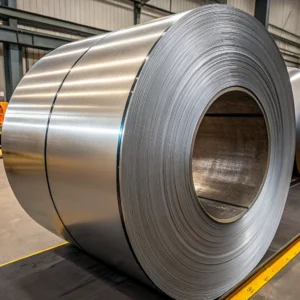
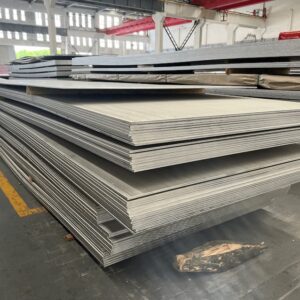
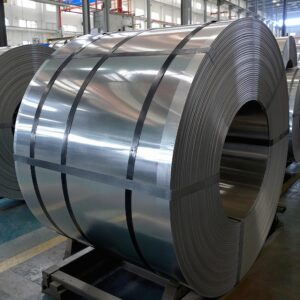
At HL Steel Company, we supply high-quality SUS347 stainless steel products for various industries, ensuring durability, corrosion resistance, and performance in demanding applications such as aerospace, petrochemical processing, and power generation systems.
Reviews
There are no reviews yet.