 Skip to content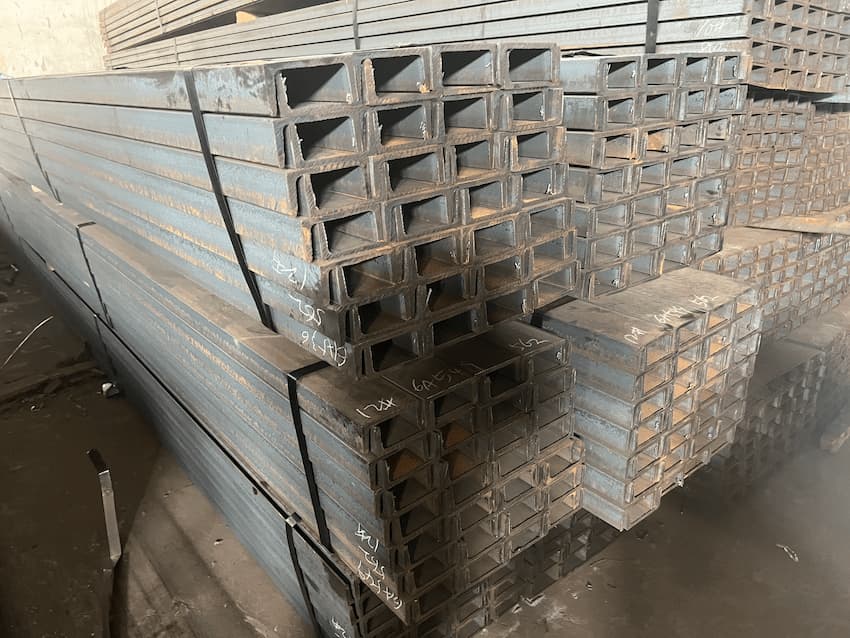
Description
Types of European Standard Channel Steel
European Standard Channel Steel comes in two main types:
- UPN (European Standard U Channels with Tapered Flanges)
- UPE (European Standard U Channels with Parallel Flanges)
Specifications and Dimensions
European Standard Channel Steel is manufactured according to several standards:
- EN 10279: 2000 (Tolerances)
- EN 10163-3: 2004, class C, subclass 1 (Surface condition)
- DIN 1026-1: 2000
- NF A 45-202: 1986
Here’s a table showing some common UPN channel dimensions:
| Designation | Weight (kg/m) | Height (mm) | Width (mm) | Web Thickness (mm) | Flange Thickness (mm) |
|---|---|---|---|---|---|
| UPN 80 | 8.64 | 80 | 45 | 6.0 | 8.0 |
| UPN 100 | 10.6 | 100 | 50 | 6.0 | 8.5 |
| UPN 120 | 13.4 | 120 | 55 | 7.0 | 9.0 |
| UPN 140 | 16.0 | 140 | 60 | 7.0 | 10.0 |
| UPN 160 | 18.8 | 160 | 65 | 7.5 | 10.5 |
Applications of European Standard Channel Steel
European Standard Channel Steel is widely used in:
- Building structures and frames
- Vehicle frames and heavy machinery
- Support components in manufacturing
- Braces, joints, and studs in construction
Advantages of European Standard Channel Steel
- High strength-to-weight ratio
- Excellent load-bearing capacity
- Versatility in design and application
- Compliance with European standards
- Easy to install and fabricate
Manufacturing Process at HL Steel
At HL Steel, we produce European Standard Channel Steel using advanced techniques:
- Hot-rolling process
- Strict quality control measures
- Compliance with international standards
People Also Ask(FAQ):
-
What is the difference between UPN and UPE channels?
UPN channels have tapered inner flanges, while UPE channels have parallel flanges. UPE channels are generally thinner with wider flanges and a deeper profile, offering weight savings while maintaining durability.
-
What are the common applications for European Standard Channel Steel?
European Standard Channel Steel is commonly used in building structures, vehicle frames, manufacturing support components, and various construction applications such as braces, joints, and studs.
-
What standards govern European Standard Channel Steel?
European Standard Channel Steel is primarily governed by EN 10279: 2000 for tolerances, EN 10163-3: 2004 for surface condition, and DIN 1026-1: 2000 for dimensions and specifications.
-
How do I choose the right size of European Standard Channel Steel?
Choose the right size based on your project’s load requirements, space constraints, and specific application needs. Consider factors such as weight, height, width, and thickness of the channel. Consult with a structural engineer or HL Steel’s experts for guidance.
-
What are the advantages of using European Standard Channel Steel?
European Standard Channel Steel offers high strength-to-weight ratio, excellent load-bearing capacity, versatility in design, compliance with European standards, and ease of installation and fabrication.


Reviews
There are no reviews yet.