 Skip to content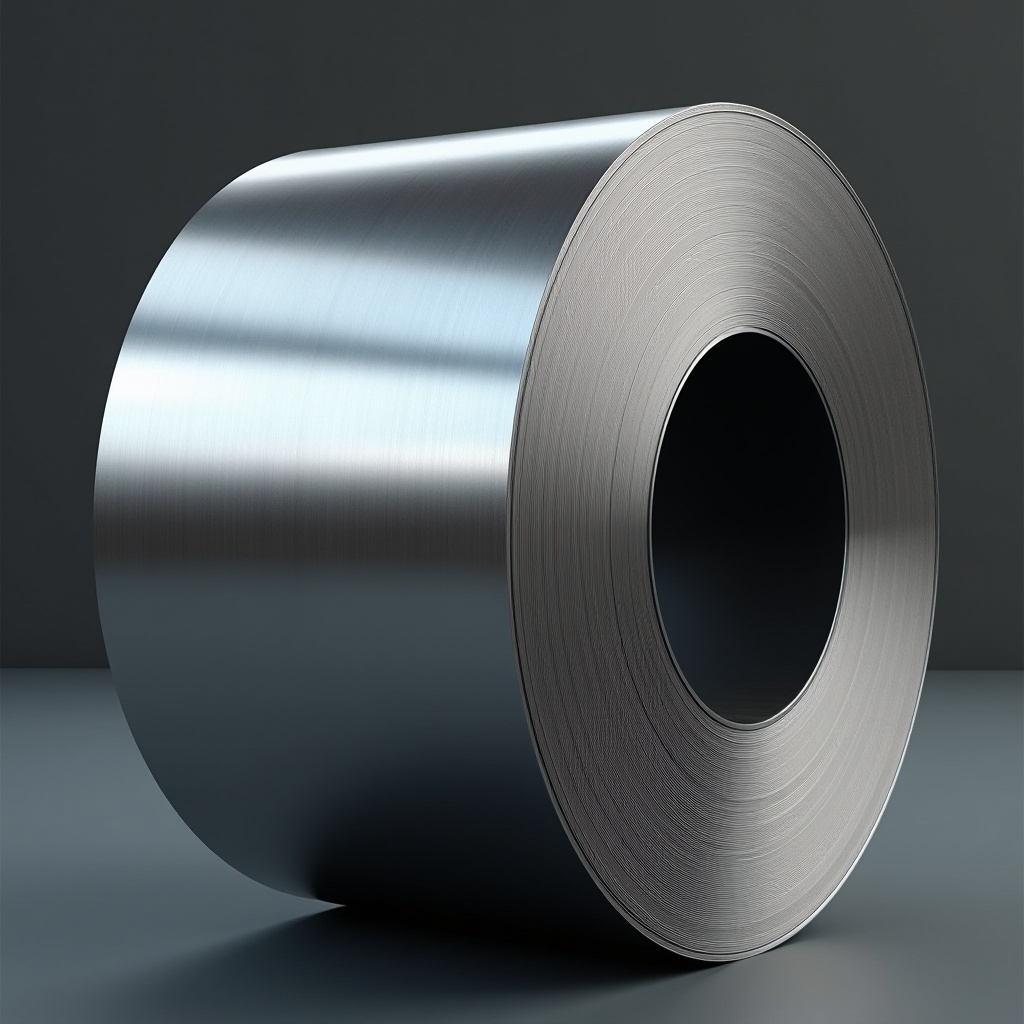
Description
Chemical Composition and Mechanical Properties of Austenitic 201L (S20103) Stainless Steel
Chemical Composition:
| Element | Percentage |
|---|---|
| Carbon (max) | 0.03 |
| Manganese | 5.5-7.5 |
| Silicon (max) | 0.75 |
| Chromium | 16.0-18.0 |
| Nickel | 3.5-5.5 |
| Nitrogen | 0.05-0.25 |
Mechanical Properties:
| Property | Value |
|---|---|
| Tensile Strength | 515 MPa (min) |
| Yield Strength | 205 MPa (min) |
| Elongation | 40% (min) |
| Hardness | 190-320 Brinell |
| Elastic Modulus | 200 GPa |
Applications and Industries Using 201L Stainless Steel Plates and Coils
201L stainless steel is commonly used in:
- Kitchen equipment: sinks, dishwashers, and utensils
- Decorative trim components
- Automotive industry: exhaust systems and trim pieces
- Construction: handrails, roofing materials, and cladding
- Industrial machinery: pumps, valves, and bearings
- Food processing equipment
- Railway rolling stock: sides and roofs of trains
Manufacturing Process and Available Dimensions
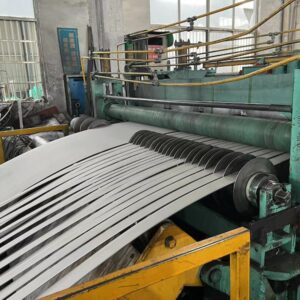
Manufacturing Process: Hot rolled or cold rolled, followed by annealingAvailable Dimensions:
| Dimension | Range |
|---|---|
| Thickness | 0.3 – 80 mm |
| Width | 1000 – 2200 mm |
| Length | 2438 – 12000 mm |
Corrosion Resistance and Performance Characteristics
201L stainless steel offers:
- Good resistance to general corrosion
- Lower nickel content than 300 series, making it more cost-effective
- Similar mechanical and physical properties to 300 series
- Non-magnetic when properly annealed (magnetic permeability generally less than 1.02)
- Good formability, similar to 304 grade
Welding and Fabrication Considerations
201L stainless steel can be welded using standard fusion and resistance welding processes. It exhibits good cold forming characteristics and is suitable for deep-drawing applications.
Comparison of 201L with Other Austenitic Stainless Steel Grades
201L offers similar performance to 304 grade in low corrosion, mainly indoor applications at room temperature. It has higher strength than 304 but may be more susceptible to stress corrosion cracking, especially after welding thicker material.
At HL Steel Company, we provide high-quality Austenitic 201L (S20103) stainless steel plates and coils, ensuring optimal performance and cost-effectiveness for your industrial applications.
Reviews
There are no reviews yet.