 Skip to content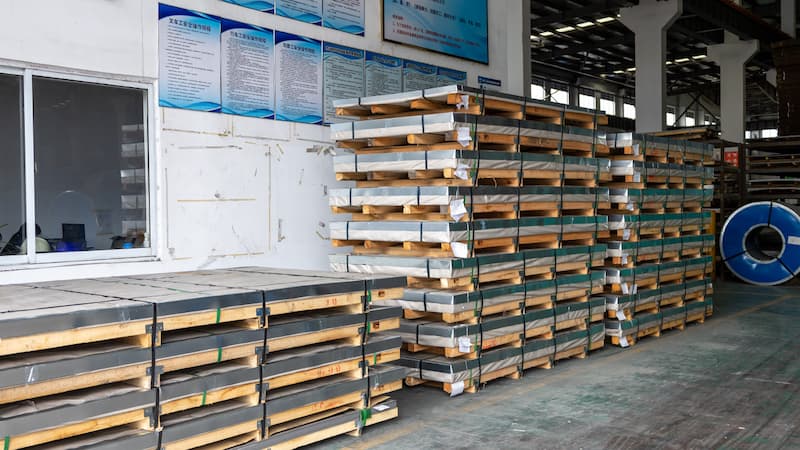
Description
Chemical Composition and Mechanical Properties of 444 (S44400) Stainless Steel
Chemical Composition:
| Element | Percentage |
|---|---|
| Carbon (C) | ≤0.025% |
| Chromium (Cr) | 17.5-19.5% |
| Molybdenum (Mo) | 1.75-2.50% |
| Nickel (Ni) | ≤1.00% |
| Manganese (Mn) | ≤1.00% |
| Silicon (Si) | ≤0.60% |
| Titanium + Niobium | Min: 0.20+4(C+N), Max: 0.80% |
Mechanical Properties:
| Property | Value |
|---|---|
| Yield Strength (min) | ~275 MPa |
| Tensile Strength (min) | ~415 MPa |
| Elongation (min) | ~30% |
| Hardness (max) | ~90 HRB |
Applications and Industries Using 444 Stainless Steel
444 stainless steel is widely used in industries requiring superior corrosion resistance, especially in chloride-rich or high-temperature environments:
- Heat Exchangers: Ideal for heat exchanger tubing due to its thermal conductivity and corrosion resistance.
- Hot Water Tanks: Commonly used in tanks exposed to high temperatures and chlorides.
- Food Processing Equipment: Prevents contamination while resisting cleaning chemicals.
- Automotive Industry: Used in exhaust systems and catalytic converters due to its resistance to exhaust gases.
- Solar Panels & Water Heaters: Excellent for solar water heating systems due to its scaling resistance.
- Marine Applications: Suitable for roofing or cladding in marine environments.
Corrosion Resistance and Thermal Properties of 444 Stainless Steel
- Corrosion Resistance:
- Superior pitting and crevice corrosion resistance compared to most ferritic grades.
- Comparable to austenitic grades like 316L in chloride-rich environments.
- Resistant to intergranular corrosion due to titanium/niobium stabilization.
- Thermal Properties:
- Higher thermal conductivity than austenitic grades like 304 or 316.
- Lower thermal expansion coefficient minimizes distortion during thermal cycles.
Comparison of 444 Stainless Steel with Other Grades
| Grade | Chromium Content (%) | Molybdenum Content (%) | Corrosion Resistance | Cost |
|---|---|---|---|---|
| 444 | 17.5-19.5 | 1.75-2.50 | Excellent (chloride-rich) | Moderate |
| 316L | 16-18 | 2-3 | Excellent | High |
| 430 | 16-18 | None | Good | Low |
Manufacturing Process and Available Forms of 444 Stainless Steel
Manufacturing Process:
- Melting raw materials in an electric arc furnace.
- Refining using AOD/VOD processes for precise composition control.
- Casting into slabs or billets.
- Hot rolling followed by cold rolling for desired thickness and finish.
- Annealing at ~750-900°C for stress relief.
Available Forms:
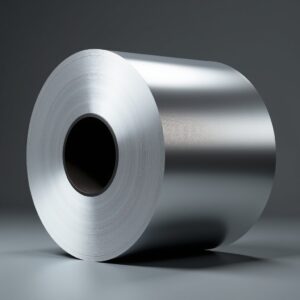
- Coils and sheets: Thickness from ~0.40 mm to ~5 mm.
- Tubes and pipes: Diameter from ~31 mm to ~127 mm.
- Bars, rods, wires: For structural components or fasteners.
Welding, Formability, and Heat Treatment of 444 Stainless Steel
Welding:
- Weldable without sensitization due to titanium/niobium stabilization.
- Excessive heat input can cause grain growth; post-weld cleaning is recommended.
Formability:
- Excellent formability for deep drawing applications but limited stretch forming.
Heat Treatment:
- Cannot be hardened by heat treatment due to its ferritic structure.
- Annealing at ~750–900°C improves ductility.
Advantages and Limitations of Using 444 Stainless Steel
Advantages:
- Superior corrosion resistance in chloride environments compared to most ferritic grades.
- Cost-effective alternative to nickel-based austenitic grades like 316L.
- Excellent thermal conductivity for heat exchangers or solar panels.
- Stable after welding; no post-weld heat treatment required.
Limitations:
- Limited stretch forming capabilities compared to austenitic grades.
- Grain growth in the heat-affected zone during welding may reduce mechanical properties.
At HL Steel Company, we provide high-quality UNS S44400 stainless steel products tailored for diverse industrial applications, ensuring excellent performance in corrosive environments and cost-effective solutions for our customers!
Reviews
There are no reviews yet.