 Skip to content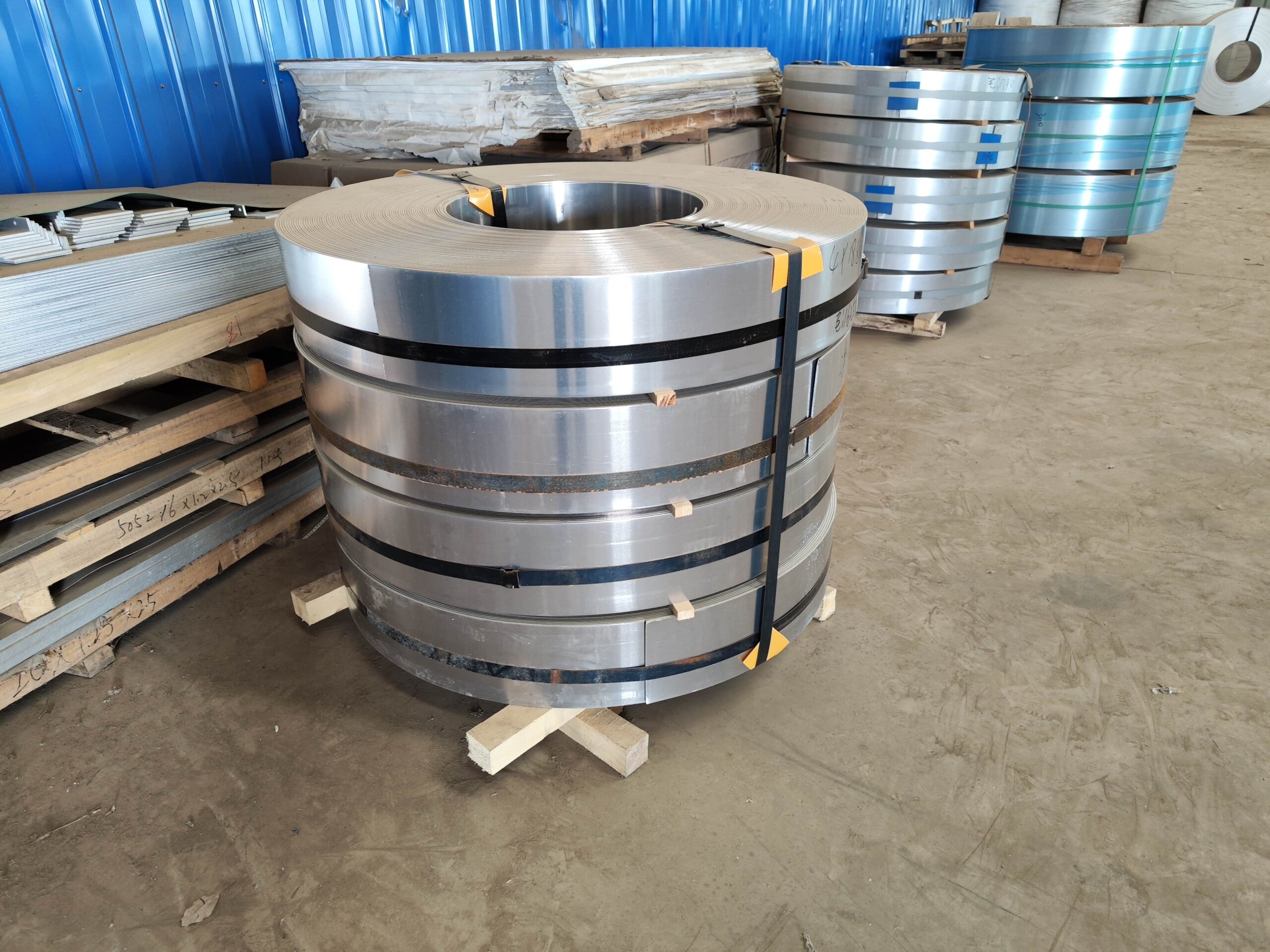
Description
Chemical Composition and Mechanical Properties of 255 (S32550) Duplex Stainless Steel
Chemical Composition:
| Element | Percentage |
|---|---|
| Chromium | 24-27% |
| Nickel | 4.5-6.5% |
| Molybdenum | 2.9-3.9% |
| Copper | 1.5-2.5% |
| Carbon (max) | 0.04% |
| Silicon (max) | 1% |
| Manganese (max) | 1.5% |
| Nitrogen | 0.10-0.25% |
Mechanical Properties:
| Property | Value |
|---|---|
| Yield Strength (min) | 550 MPa (80 ksi) |
| Tensile Strength (min) | 760 MPa (110 ksi) |
| Elongation in 50mm (min) | 15% |
| Hardness (Brinell max) | 297 HB |
Applications and Uses of 255 Duplex Stainless Steel in Industry
255 duplex stainless steel is widely used in industries requiring high strength and corrosion resistance, including:
- Marine Environments: Offshore platforms, seawater piping, pumps, and valves.
- Chemical Processing: Tanks, reactors, heat exchangers, and piping systems for handling corrosive chemicals like phosphoric acid.
- Oil & Gas: Downhole tooling, wellhead equipment, and sour service environments.
- Pulp & Paper Industry: Digesters, bleach washers, and paper rolls.
- Pollution Control: Scrubbers, fans, and precipitators.
- Food Processing: Equipment for sugar cane processing and vegetable handling.
Corrosion Resistance and Performance Benefits
The alloy exhibits superior corrosion resistance compared to standard austenitic stainless steels like 316L:
- Exceptional resistance to pitting and crevice corrosion in high-chloride environments.
- High resistance to chloride stress corrosion cracking.
- Superior erosion and cavitation resistance in abrasive conditions.
- Excellent performance in seawater with a critical pitting temperature exceeding 50°C.
Manufacturing Process and Available Dimensions
Available Dimensions:
| Product Type | Thickness (mm) | Width (mm) | Length (mm) |
|---|---|---|---|
| Plate | 6 – 100 | 1000 – 3500 | Up to 12000 |
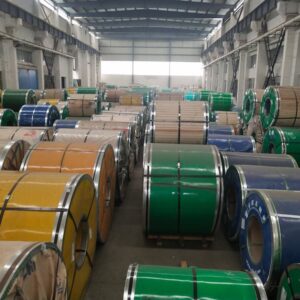
| Coil | 1 – 12 | Up to 1500 | Continuous |
The material is typically produced through hot rolling followed by annealing to achieve its balanced microstructure of ferrite and austenite phases.
Welding and Fabrication Considerations
255 duplex stainless steel has good weldability but requires careful control during welding to maintain its phase balance:
- Use matching or over-alloyed filler metals.
- Control heat input to avoid excessive ferrite formation or sigma phase precipitation.
- Preheat is not required; interpass temperature should be kept below ~150°C.
Comparison of 255 Duplex Stainless Steel with Other Grades
| Grade | Yield Strength (MPa) | Tensile Strength (MPa) | Pitting Resistance Equivalent Number (PREN) |
|---|---|---|---|
| Alloy 255 | ≥550 | ≥760 | ~40 |
| Duplex 2205 | ≥450 | ≥620 | ~35 |
| Super Duplex F53 | ≥550 | ≥750 | ~42 |
Cost-Effectiveness and Long-Term Benefits
Due to its higher strength-to-weight ratio, excellent corrosion resistance, and durability in harsh environments, Alloy 255 reduces material usage, maintenance costs, and downtime in critical applications.
At HL Steel Company, we provide premium-quality Alloy 255 (S32550) duplex stainless steel plates and coils tailored for demanding industrial applications, ensuring optimal performance, reliability, and cost savings for your projects!
Reviews
There are no reviews yet.